Samsung Electronics about to unveil its another intriguing flagship Galaxy Note 5 throughout the world on August 13, 2015 during an event in New York, United States, followed by a grand launch in Pakistan either by the end of August or in the beginning of September.
The upcoming Galaxy Note 5 appears to be an evolution of the Note 4 with a few common design elements from the previous lineup.
In addition to Galaxy Note 5, Samsung is also launching the Galaxy S6 Edge Plus which is bigger in size as compared to the popular Galaxy S6 Edge model.
According to most recent reports, the Galaxy Note 5 will feature a 5.89-inch QHD screen and a slim 7.9mm thick build unlike its predecessor Note 4 which was having 5.7-inches QHD display and 8.5mm thickness.
Galaxy note 5 design rumors
Galaxy Note 5 Design Rumors
It is said to be powered by a better Exynos 7422 processor and 4GB of RAM. Additionally, will be having a same 16-megapixel primary camera with optical image stabilization (OIS), along with a stylus pen.
The Galaxy S6 Edge Plus will not be hosting a stylus, reportedly. It will also feature a 5.7-inch display, Exynos 7420 processor, 3GM of RAM, and 16-megapixel front camera.
It seems like Samsung is high on making large-screened products in order to give tough time to the iPhone 6, iPhone 6 Plus and possible the upcoming iPhone 7 but it remains to be seen that what price tag the company will set to make the devices more attractive for the potential buyers.
While a handful of smartphones nowadays come with wireless charging as an option, the idea remains relatively niche, owing to its cost, less acceptance and speed.
But will that stop Samsung from building in a wireless charger on the base of its new monitor, the SE370. Samsung’s own current flagship phones, the Galaxy S6/S6 Edge come with the feature built-in so there is some dots being connected there.
Theoretically though, every phone with the Qi wireless charging standard could be charged with the monitor. The standard is the most prevalent in smartphone devices currently, as is used by manufacturers varying from the Lumia 1020 to the Yotaphone 2.
The Samsung Galaxy S6 and S6 Edge also come with the same technology so could be used with the monitor
Other than that, the monitor just about covers the bases. It will be available in two sizes: 23 and 27 inch. It is a PLS (Plane-to-Line Switching) panel for a better experience and brightness levels of up to 300 cd/m2. Viewing angles stand at an impressive 178 degrees.
The resolution of the display is set at 1080p Full HD. It makes use of AMD’s FreeSync which works with AMD graphic cards to improve input latency, as well as reduce stutter and obtain a response time of just 4ms.
The Eco Saving Plus mode reduces brightness up to ten-percent less energy usage while an Eye Saver mode protects the users’ eyes from harmful blue light. The design is also stylish and decidedly good-looking, with just a white version being announced for now featuring less bezels and a slim waistline.
No word is out on the pricing or availability yet. Though, since it’s only 1080p, it might be cheaper than you think. The monitor can do wonders for you if you want to reduce clutter on your work desk or just plain hate wires. It is yet another small step towards making wireless charging accessible.
We now have our hands on the first photos of what we believe is the Samsung Galaxy Note 5, courtesy of NowhereElse. Based on the previously leaked renders, the device looks as expected. You will notice, however, a small gap at the edge of the stylus holder: this is likely where your nail will fit to hook it out.
Why is this significant? Only because it suggests that the Note 5 will not arrive with an automatic ejection system, as had been speculated. With only a few weeks to go before the rumored launch of the Note 5, there will almost certainly be more photos to follow soon. Check out the compiled image below.
Alongside the above photo and recent Amazon.it renders of the Note 5 and some case designs, we've also got our hands on some fan-made images. Ivo Marić, known on Instagram as beespline, has uploaded some wonderfully realistic renders of what the Galaxy Note 5 may look like, which are not only impressive from a technical standpoint, but could very well be how the final product looks.
Discounting the bottom speaker/stylus/headphone jack placement (which we think will be reversed) and the slightly raised home button, this fits with the rumored design of Note 5 so far. Check out the pictures below.
Based on what's been leaked so far, the Galaxy Note 5 looks like it's going to be an enlarged Galaxy S6 with a stylus. The same protruding camera sensor beside the flash and heart-rate monitor can be seen on the rear with similar button placements and speaker grill.
The phablet also appears to be housed in the same materials as the Galaxy S6. This premium-feel aluminum unibody would suggest the device won't come with a removable rear panel or a removable battery, as has been previously speculated.
Fans of Samsung's Galaxy series disapproved of this design decision in the Galaxy S6, so we'd expect this revelation to be similarly disappointing, if not exactly unexpected.
Weight has been added to rumors of a mid-August launch for the Galaxy Note 5, as Business Korea touts an announcement on August 13. Earlier, Sam Mobileclaimed that the Galaxy Note 5 (and Galaxy S6 edge+) would be unveiled in New York City on August 12, with a release on August 21.
In an unrelated leak, Polish website Tablety.pl speculates that the Galaxy Note 5 could come with microSD card support, thanks to information gleaned from a Sprint device page. The device referenced, model number SM-N920P, is tipped as the Sprint Galaxy Note 5 variant. Within the device page text you will find the line "External Memory Slot Yes External Memory MaxSize 128GB SDXC," which seems to affirm support for 128 GB microSD cards.
Is this the Note 5, and will it arrive with expandable memory after all? There may only be a few short weeks left until we find out.
TheKorea Herald previously suggested that the Galaxy Note 5 would launch in mid-August ahead of the IFA conference, unlike earlier devices in the Note series.
Though Berlin's IFA conference is typically the setting of Samsung's phablet launches, The Korea Herald indicated that the release could be brought forward to allay the head-to-head competition with Apple when it releases the iPhone 6S in September.
It has also been speculated that Samsung is trying to hurry the Note 5 launch as a response to lackluster sales of the Galaxy S6. Having said that though, Sam Mobile has claimed the Galaxy Note 5 design will be a "blown-up version of the Galaxy S6" albeit with an "extremely thin screen bezel".
The Galaxy Note 5 price will likely to come close to 1,000 USD off-contract. The Galaxy Note series is known for delivering cutting-edge smartphone technology, and with the Galaxy Note Edge coming in at around 1,000 USD when it was introduced last year, there's every chance the new Note could do so too.
Samsung Galaxy Note 5 specs
Both the Note 5 and the S6 Edge are devices are said to feature a 5.67-inch Super AMOLED display with QHD resolution (2,560 x 1,440 pixels) and 4 GB RAM, according to Sam Mobile.. They are also expected to come in four colors: gold, silver, black and white.
As the name indicates, the Galaxy S6 Edge Plus would have a dual-edged display like the Galaxy S6 Edge, while the Galaxy Note 5 is destined to have a flat screen.
Lastly, Sam Mobile suggests that the Note 5 will house a Exynos 7422 processor which it says will combine a "64-bit octa-core CPU, GPU, RAM, storage, and the company’s homegrown Shannon LTE modem in a single package." Like the OnePlus 2, the Note 5 will probably make use of a USB Type-C connector too.
Samsung Galaxy Note 5 features
Samsung submitted a patent application file on June 30 for a new feature entitled Write on PDF, which Sam Mobilesuggests could be implemented for the Galaxy Note 5.
The Galaxy Note 4 includes a 'Screen Write' feature which lets you draw over what's on screen, but to do so on top of a PDF requires you to take a screenshot first. This new trademark would allow the user to write on PDFs simply by activating Screen Write.
There's nothing to say that the patent relates to the Galaxy Note 5, or that its functionality will be as we suggest, but it seems like the logical conclusion.
While it's not a groundbreaking feature per se, it is indicative of Samsung's desire to make the Galaxy Note 5 the most convenient phablet it has ever produced.
Samsung's stylus, known as the S Pen, is something which sets the Galaxy Note series apart from the competition. While it is performing the best it ever has on the Note 4, there is still a lot of potential for this technology and Samsung is almost certain to deliver some improvements (like the auto-eject feature mentioned at the top of the page).
The handwriting recognition and usability has been improved in the latest version, but can the classic feel of pen on paper be surpassed by a smartphone? Possibly.
Samsung Galaxy Note 5 display
Though Samsung is always keen to be at the forefront of display technology, a 4K display for the Galaxy Note 5 does seem unlikely at this point, with the latest rumor suggesting that it will house a 5.67-inch QHD display.
Should Samsung include a 4K display it might create a huge strain on the battery life (even with the fast-charging expected on the Note 5), it would be expensive, and Samsung already has what many believe to be the best looking smartphone display in the world on the (QHD) Galaxy S6. It would probably be unnecessary risk to include a UHD display on one of Samsung's phablets this year.
Samsung Galaxy Note 5 camera
It seems likely that the Galaxy Note 5 will house some impressive camera tech, given that Samsung tends to prioritize this for its flagship devices. The Note 5 would probably house a wide-angle front-facing camera for all of those 'welfies' that people are clamoring for, likely in the region of 5 MP. As for the primary camera, this could be 16 MP offering with optical image stabilization and 4K video recording, as is tipped for the Galaxy S6 Edge Plus.
You are not surprised at all at this, are you? Because if you are, we’ll be surprised. After months of grueling speculation and not-so-special leaks, Samsung’s worst kept secret ever is now official. It’s surprising even to think that this is the same company which hid the Galaxy S III inexplicably well.
It’s also Samsung’s thinnest phone, but of course you know that. There’s a slight camera bump but that’s manageable and less so than in the S6/S6 Edge.
Being the highest-end A-series phone, the A8 comes with a 5.7” 1080p display with Super AMOLED at the front. There’s optional dual-SIM capability, reportedly, with support for 4G LTE onboard too. Underneath, you get a mid-range 64-bit, octa-core Snapdragon 615 processor with two quad-core Cortex-A53 CPUs clocked at 1.5Ghz and 1Ghz.
The Samsung Galaxy A8 is the most premium smartphone in the series
At the back is a 16 megapixel camera with LED Flash and 1080p video, along with a 5 mp selfie shooter at the front. Connectivity modes are highlighted by NFC, Wi-Fi and 4G LTE. The battery at the back is of an impressive 3,050 mAh capacity, with standby time of up to 304 hours. Finally, there’s the oh-so-important fingerprint scanner, which is embedded on the home button.
One thing we still don’t know officially is the price, but the A8 certainly won’t cheap. It is nice to see that Samsung is at last bringing better-designed phones down its food-chain, and the A8 is just another step in the (seemingly) right direction.
Going by Samsung’s usual launch schedule, the Galaxy Note 5 would be less than two months away from getting an official announcement at this point of time. Going by recent rumors, however, the time before the Note 5 is unveiled would be even shorter. Well, it looks like the latter is what we will have to believe in, as our insiders have revealed today the the Galaxy Note 5 will be announced on August 12, and go on sale around two weeks later on August 21.
We have also learned that the Galaxy S6 edge Plus will be launched as the Galaxy S6 edge+, and will be announced alongside the Note 5 on the same date (Update: it will also go on sale on August 21.) Samsung’s plan to launch two big handsets at the same time (and risking one device eating into the sales of the other) was leaked by a report out of the Korean press a few hours ago, and we can confirm that it is indeed what the company intends to do. The two devices will also be accompanied by the official launch of Samsung Pay, at least for the US market.
Now, let’s move on to a few details of the Galaxy Note 5 and Galaxy S6 edge+. First, Samsung’s next phablet flagship. Let’s get one of the most important aspects of the phone out of the way: The Note 5 will not have a microSD slot, something we had guessed would be the case earlier this month. In terms of design, the phone will basically be a blown-up version of the Galaxy S6. But like the Galaxy A8, the Note 5 will have extremely thin screen bezel, a design change that might come in handy in terms of ergonomics keeping in consideration the new metal and glass design that the Note 5 is expected to feature.
The S Pen will also be seeing a few design changes. According to the information we’ve received, the stylus will look more like a pen this time around (and apparently feel like one, too) and will have the same color as the color of the device. Speaking of colors, the Galaxy Note 5 will be offered in silver, gold, black and white options; these are the same options we’ve seen on the Note 4, though the glass construction on the Note 5 is sure to make these same-old colors look considerably better.
When it comes to the Galaxy S6 edge+, there’s really not much to tell. The device will be a phablet version of the Galaxy S6 edge, with a curve on either side of the screen and the same color options as the Note 5. We can, however, confirm that the S6 edge+ will be powered by the Exynos 7420 instead of a Snapdragon 808, and have 3GB of RAM. Oh, and as we said yesterday, the Note 5 will certainly become the first Samsung phone to feature 4GB of RAM. We’re guessing storage options would be the same as the Galaxy S6 lineup, though it would be great if Samsung would make the 64GB variant the base model to make up for the lack of expandable storage.
Provided all the information we have been given turns out to be correct, Samsung’s next UNPACKED event could be one of its biggest yet, if only because of the number of things it will announce on a single day. The August launch seems too early to be true, but with numerous rumors pointing at Samsung moving faster with the Galaxy Note 5, it certainly looks like we will be hearing everything from the horse’s mouth in under a month from now.
It’s almost the time of year where everyone releases their big new flagship smartphones, and one of the phones most eagerly anticipated is the Galaxy Note 5 from Samsung. The next in Samsung’s line of over-sized smartphones, the Galaxy Note 5 is expected to get its debut at IFA 2015 and is likely to be one of the biggest releases of the year.
As tends to be the case with these things, information has been leaking out about the Galaxy Note 5 for a little while now, but while we have been seeing reports of a 5.67-inch AMOLED screen and wireless charging, information on what will keep the insides of the smartphone warm has been a little thin on the ground. The Galaxy Note lineup is known for packing quite a punch in the performance stakes, so it’s always exciting to see what the new phone will come with. Now, thanks to new information coming out of SamMobile, we have our best information yet as to what the Galaxy Note 5 will use as its beating heart.
According to the new report, the Galaxy Note 5 will come with a whopping 4GB of LP-DDR4 RAM, which means that it will not only have more, but also faster memory than almost anything else on the market at the time of its announcement. Backing that RAM up will be a new Exynos 7422 chip which is said to be Samsung’s first real single-chip part. Within that chip will be an eight-core 64-bit CPU, GPU, storage and RAM as well as an LTE modem. Packing all of that into one chip isn’t going to be easy, but if Samsung does manage to get the thing out of the door then the Galaxy Note 5 will be quite the achievement.
Due to lackluster Galaxy S6 sales, Samsung has also been reported to be considering bringing the Galaxy Note 5 to market as soon as August beating the iPhone 6s launch which is due for its big debut in September, but whenever Samsung’s new phablet does launch, the new smartphone is set to cause quite the splash.
If Samsung does indeed launch its new phablet in August, we’ll definitely know about its plans in the days to come, so stay tuned.
Samsung already let slip that the new phablet is in the pipeline and we expect it to arrive at IFA 2015 in September. Based on recent speculation, and Samsung’s current design philosophy and direction, we're taking a look at what the new phone might offer in our Samsung Galaxy Note 4 vs Galaxy Note 5 comparison.
Galaxy Note 4 vs Galaxy Note 5 comparison: Design and build quality
The Galaxy Note 4 design appears to have been informed by a lackluster response to the of the Samsung Galaxy S5. Instead of the plastic chrome-effect body with dimpled rear, the Galaxy S4 Samsung introduced metallic edges and faux-leather. The result was a phablet which looked sharp and felt comfortable from all angles.
Yes it was big, at 153.5 x 78.6 x 8.5 mm, and weighty at 176 g, but the combination of the black metal sides, the silver trim, and the soft, textured rear gave it an air of importance. Moreover, with the display taking up about 75 percent of the body, it never felt too big, as phablets sometimes can.
This is partly thanks to the convenient button placement and added grip provided by the rubbery rear, nonetheless I'm pleased that current rumors suggest the display proportions won’t change significantly on the new phablet.
This year, the Galaxy Note 5 is primed to take further steps into the domain of premium feel, with a metallic unibody as found on the Galaxy S6. While this could provide for and even more sultry feel to the phablet, it comes with its caveats.
Until recently, the Galaxy Note series held something over the iPhone and Nexus competition: a removable battery and expandable storage. These were afforded by its removable back panel, which thus far does not like will be making a return on the Note 5.
This isn’t a huge surprise given Samsung’s lack of these on the Galaxy S6 and Galaxy S6 Edge. That being said, an interest in phablets tends to imply a higher interest in 'consumption' also, as media tends to looks better on larger displays of a phablet than a smartphone.
With phablets primed for watching movies and videos, which often require high storage capacity and always require a lot of power, the idea of being limited in these spaces may turn some people off.
It’s too soon to rule out expandable storage and a removable battery, this is only speculation. But if the Galaxy Note 5 does lacks these features, it could spell trouble for the Note series, and Samsung’s profits.
Galaxy Note 4 vs Galaxy Note 5 comparison: Display
The Galaxy Note 4 has a QHD screen which comes in at 5.7 inches. It’s super-bright, highly detailed (with around 515 pixels per-inch), responsive and provides excellent viewing angles.
In almost every circumstance the Note 4’s screen exceeds that of the competition. Like many of Samsung’s displays, it is a fraction over-saturated and not 100 percent true to life, but I welcome its vibrant and larger-than-life tones. Truly, there are few smartphones with a display as sharp and clear as this.
Samsung will no doubt deliver in the display area again, as it has done year-on-year with its Note series, but I don’t think we’ll see the leap to 4k resolution just yet. It would probably be too costly and far too hard on the battery.
More likely, we’ll see another QHD display of roughly the same proportions as its predecessor, though this isn't necessarily a bad thing. If it’s as good as or better than the last offering it will still be worth getting excited about.
Galaxy Note 4 vs Galaxy Note 5 comparison: Software and performance
What separates the Galaxy Note 4 from most other phablets is its stylus, the S Pen. With its own set of largely useful functions, this is one of the major reasons to pick up the Note 4. You can read more about what it does in our Samsung Galaxy Note 4 review, but at this point we don’t know where Samsung will take this functionality in the Note 5.
Samsung has been continuing to improve the Air Command menu which works in conjunction with the S Pen in each iteration of the Note series, and the Korean company is also particularly keen on making “multi-tasking” a focal point of its Note series upgrades.
Last time around Samsung introduced “windowed apps” which let you minimize apps just by dragging from the top right corner, with the apps remaining open in the foreground. What is the next step for multi-tasking go in on the Note 5?
In terms of performance specs, the Note 4 housed a Quad-core Qualcomm Snapdragon 805 processor or Exynos 5433, depending on where you purchased it. Since Samsung split with Qualcomm, it will be using its own chipset on the Note 5 which current rumors suggest will be a Exynos 7422 chip.
The Exynos 7422 is said to combine an octa-core CPU, GPU and RAM and Samsung’s Shannon LTE modem in an all-in-one package. This would be new ground for Samsung, and it’s too early to say how successful it will be.
Galaxy Note 4 vs Galaxy Note 5 comparison: Camera
The Galaxy Note 4 camera is another standout feature of the handset. The 16 MP main snapper comes with OIS, autofocus, LED flash, and 2160p video-recording at 30 fps. These aren't only top-tier specs but its real world performance is reflective of the internal components' quality. Check out some of the shots below.
Galaxy Note 4 vs Galaxy Note 5 comparison: Battery
As mentioned previously, the Galaxy Note 5 is unlikely to house a removable battery. The Note 4’s battery has a 3,220 mAh capacity which ensures it’s battery life is good, especially since with a QHD display gobbling it up. It has significantly stronger battery performance to the Galaxy S6's 2,550 mAh battery which houses a QHD display also.
Moreover, the Galaxy Note 4 offers quick-charging, providing around 50 percent battery life in a 30 minute charge, as well as wireless charging - though it requires a separate battery cover. So, where will the improvement lie in the battery department on the Note 5?
If the battery capacity is going to increase significantly it would have to make the phone longer or wider, neither of which is particularly likely. In addition, both phones will likely get upgraded to Android’s next version and take advantage of the battery improvements found therein. (You can read more about the features ofAndroid Mat the link.)
Samsung decreased the battery size between the Galaxy S5 and Galaxy S6, so there’s even the chance that this could happen between the Note 4 and Note 5. Sure, the software will likely be better optimized for the battery, but it probably won’t produce a notably stronger battery performance.
Galaxy Note 4 vs Galaxy Note 5 comparison: Conclusion
If the current rumors are accurate, and the Galaxy Note 5 display is almost the same as its predecessor, the battery is weaker and isn’t removable and it lacks MicroSD card support, then I really don’t know how much better the Galaxy Note 5 is going to be than its predecessor.
It might have increased performance, the camera could be more impressive, and it will be more prepared for the next Android version, but the degrees to which this matters, in the grand scheme of things, may be negligible.
What I mean is: how much faster and stronger can things get?
Until I see how the software and S Pen functionality is changing, and how much it is going to cost, I’m skeptical about how the Galaxy Note 5 will make the series tangibly better.
But that’s just my take. What’s yours? Let me know in the comments below.
While most people are still trying to wrap their heads around 4K displays (and 8K screens aren't that far off), Samsung is setting up an even more ambitious milestone: It wants to build an 11K mobile display by 2018, reports Korea's Electronic Times. Yes, 11K! That's an eye-melting 2,250 pixels per inch, around four times higher than Samsung's existing quad-HD mobile displays. Samsung isn't alone in this crazy experiment either: It's already teamed up with 13 companies to work on the so-called "EnDK" project, and the South Korean government is investing $26.5 million over five years. So what's the point of an 11K resolution on mobile, when even 4K seems like overkill? Samsung says that that crazy amount of pixels will give screens a 3D-like effect, likely without the need for wearing glasses. We've noticed that the stunning quad-HD displays on Samsung's Galaxy Tab S slates can sometimes feel three-dimensional with the right content, so there's a chance Samsung might be onto something by exploring 11K displays.
According to an insider, it is confirmed that Samsung will release the next entry in its Galaxy Note series, Samsung Galaxy Note 5, in mid-August this year at the USA. This will be a break in its tradition of releasing new entries of its premier line of phablets in the September-October period. Since the release of the first Galaxy Note in October 2011, Samsung reveals a new Galaxy Note in IFA Berlin and then releases it in late September or October of the same year.
Traditionally, Samsung’s Galaxy S series is considered to be a rival of the iPhones. However, since the release of iPhone 6 Plus, Samsung’s Note series has also been in contention. With the imminent release of iPhone’s next iterations (most probably 6S and 6S Plus), it is believed that this shift in release date is to avoid Galaxy Note 5 from coming into direct competition with the duo of 6S phones. The earlier launch will give the Note 5 some breathing room in the market before the iPhones are released in late 2015. Furthermore, the reveal is also reportedly going to be in the US (Apple’s home turf) rather than Germany this time.
Galaxy Note 4’s concurrent release with iPhone 6 last year might have prompted the change in release date. This advance in release date also comes at the heels of reduced profits from Q2 2015, compared to the same period last year. But analysts believe that was due to a mismatch between Samsung’s expected demand of Galaxy S6 and S6 Edge and the actual demand. This meant the company’s supply couldn’t match the higher than expected demand of S6 Edge.
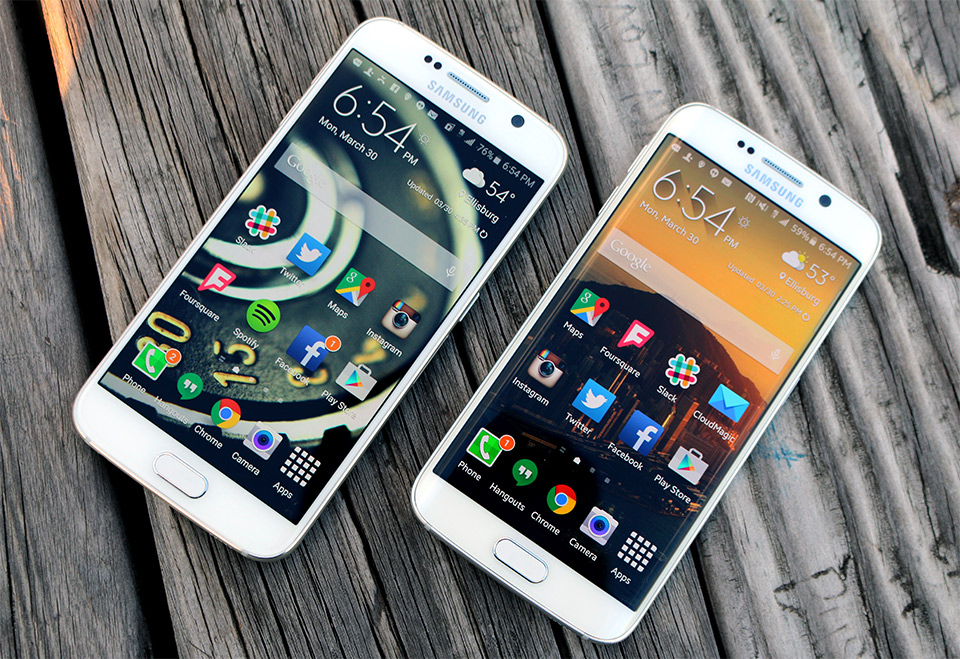
Samsung Galaxy S6: it’s better than before, but it’s still got TouchWiz
In recent years Samsung’s smartphones have been widely praised for their hardware, with good reason: they’re great. But sometimes the software has spoiled the experience, usually for one of two reasons: Samsung has been quite keen on pre-loading all kinds of apps whether you want them or not, and it puts its own TouchWiz interface on top of Android.
As interfaces go TouchWiz isn't bad, but it's fairly divisive: if you sit a bunch of Android fans down to debate TouchWiz vs stock Android, things are gonna get ugly. Just like TouchWiz. Ho ho!
The good news is that with the S6, Samsung calmed down on the apps front - and it has also approved a theme that makes the S6 and S6 Edge less TouchWizzy and more Androidy. Here’s how to get it without rooting your device or doing anything remotely difficult.
Samsung Galaxy S6: how to turn it into a Nexus
If you’ve used or seen a recent Nexus you’ll know that its stock Android interface looks quite different to TouchWiz. That’s because it’s pure Android the way Google intends it to look, and it uses an interface called Material Design. And now, you can get a Material Design theme for your Samsung.
This is probably as close as we’ll ever get to a Google Play Edition version of the Galaxy S6 without having to root the device and get jiggy with its guts. Here’s how to get the material theme and turn your Samsung Galaxy S6 into a Nexus.
How to get Material Design on the Samsung Galaxy S6
In order to turn the Samsung Galaxy S6 into a Nexus, you’ll need to visit Samsung’s Theme Store. To do that, press and hold on the home screen and then tap on the Themes icon that appears. You should now see a Theme Store icon at the bottom. Tap that.
In the theme store, scroll down to the Modern and Simple section and swipe left until you see Material Design. This theme was previously in the Themes for Man section, but it would appear Samsung realized how silly this was and relocated it. Once you’ve found it, it’s just a matter of selecting the theme and installing it.
Material Design on the Samsung Galaxy S6: why it’s not quite perfect
If you were to put your Samsung Galaxy S6 with the Material Design theme next to a Nexus running Lollipop, you’d soon notice that while the Material Design theme is pretty close to Google’s design, but it isn’t an exact copy.
That’s because some of the elements of the real Material Design interface such as wallpapers and icons are copyrighted, and when developer Samer Zayer first submitted his theme to the Theme Store, Samsung booted it off again citing copyright concerns.
As a result, what you actually end up with on your Samsung Galaxy S6 is a kind of cross between TouchWiz and stock Lollipop: it looks almost but not entirely like a Nexus, and wherever something is copyrighted the developer has created a convincing alternative that shouldn’t get him sued. The theme should offer the best of both worlds, with Samsung’s features and a close approximation of Google’s graphic design.
How to turn your Samsung Galaxy S6 into a Nexus with the Google Now Launcher
If you don’t like the Material Design theme, there’s another option: the Google Now Launcher app.
The Google Now Launcher is a replacement app launcher for your Android device, and as it comes straight from Google it doesn’t have any of the - ahem - enhancements that the phone or tablet manufacturer might have foisted on your operating system.
Previous versions attempted to stick with the version of Android you were running, but whatever device you’ve got the current version gives you the same look and feel as Lollipop and Android M. Between it and the Google Search app you can have Material Design on your S6 for most of the things you do.
What do you think? Has Samsung toned down TouchWiz, or do you wish it’d just give you stock Lollipop and let you customize it yourself? Are you a fan of Material Design, or do you think Samsung’s got the - wait for it - Edge? Let us know in the comments!
The South Korean tech giant Samsung has recently revealed that the second quarter profits of the company are observed to be lower than expectations of its latest Galaxy S6 flagship and hence the operating income declined 4% for the Q2 of 2015 to $6.1 billion by the end of June.
Despite opening several new production line to meet the demand, the reason for the declined sales is said to be the shortage in the supply of these devices alongside the meek demand from the major markets across the world, as said by Samsung.
The sales of Samsung Galaxy S6 flagship clocked in at $42.24 billion (48 trillion won) however, the expectations were around $46.64 billion (53 trillion won) from 37 analysts compiled by Bloomberg.
The overall decline observed in sales is 8.3% as compared to the same quarter of 2014.
It means that the lastest and the most premium flagship by Samsung did not manage to attract the customers probably due to its competitor’s iPhone 6 and other smartphones offered by different brands.
Commenting about the Galaxy S6 declined sales, an equity analyst at HMC Investment Securities Co, Greg Roh stated that:
“S6 didn’t sell as well as the market had hoped for, partly because of continued outperforming of iPhones combined with the supply constraint. The sales sharply missed the market expectation, which implies that overall technology industry demand for smartphones, TVs and PCs is weakening. It doesn’t matter how competitive you are if overall demand is weak. Third-quarter earnings will likely be similar to the second quarter.”
Moreover, the share price of Samsung which has fallen 7.2% this year, went down further by 0.8% recently after the announcement of the earnings estimate.
In face of strict competition, Samsung has announced a new starter-range smartphone called the Galaxy V Plus. The successor to the last year’s Galaxy V comes for $82 and has just the features to make it usable.
The display at the front is a 4” capacitive TFT LCD panel with WVGA (800 x 480) resolution. The phone follows the usual design language of Samsung. Dual-SIM support is found here by default and every phone will come with two micro-SIM slots.
Underneath, the phone comes with a 1.2 Ghz dual-core processor, 512 MB RAM and 4GB internal storage, out of which approx. 2 GB will be usable. Those are surely unflattering figures but the phone is surely not trying to prove itself as a power-performer either. There is a microSD card slot to expand it further.
At the back is a 3 megapixel camera with 480p video recording at 30 fps, along with a complimentary front-facing shooter which comes with a 480p camera too. The phone comes with 3G, Wi-Fi and Bluetooth 4.0 for connectivity. At the back is a 1,500 mAh battery to power.
The Galaxy V Plus will be available in two colors: Black and White. As said it will retail for $82 which is just about fine for a branded phone which runs Android 4.4 KitKat out of the box (and TouchWiz on top of it).
For that price, it will face stiff competition from the likes of Microsoft Lumia and other Chinese brands and we’re not sure if it has the tools to compete. So this, or the QMboile A1?
When Apple revealed the 'Force Touch' feature for the iPhone 6S, we mused that it could make the phone a Galaxy S6 killer. The latest iPhone 6S leaks, however, suggest that this feature will impact the phone's design, raising the question of whether Apple is abandoning its design principles to become more of a ‘gadget’ phone like Samsung’s flagships.
This week, Engadget Japan revealed what appeared to be a diagram of the upcoming iPhone 6S, showing the phone to be 0.2 mm thicker than the iPhone 6. This may not sound like much, but take into account Apple's design-focused ethos and the fact that this would make the iPhone 6S the first 'S' iPhone thicker than its non-'S' variant, and it's indicative of a risky shift in the company's thinking.
The reason for the extra girth on the iPhone 6S is not to accommodate a larger battery as you'd expect, but to include the 'Force Touch' feature - which makes the screen pressure-sensitive. If implemented well, this could be a winning feature for the iPhone 6S. If there were even three different degrees of pressure you could apply, then it'd seriously expand the phone's usability - with extra gestures such as 'hard-swiping', or 'soft-tapping'. And just imagine how handy it'd be for improving iffy mobile game controls.
However, if Force Touch works in a similar way to how it does on the Apple Watch (i.e. very basic), then the iPhone 6S could be in trouble.
The Galaxy S6 Edge has a fingerprint sensor, heartrate monitor, IR blaster and Edge display in a 7 mm chassis - 0.1mm thinner than the rumored iPhone 6S width. Of those Galaxy S6 Edge features, the iPhone 6S is only expected to have a fingerprint sensor - and its own Force Touch tech, of course.
If Force Touch is a flop and, as expected, tips the iPhone 6S thickness over that of the S6 Edge, then that will have big implications for Apple's reputation as the world's foremost smartphone designer. Crucially, the added thickness of the iPhone 6S, for the sake of a single throwaway feature, would say to the world that Apple is incapable of doing what Samsung did - making a feature-packed phone without having a negative impact on its design.
While the iPhone has one of the most loyal consumer bases in the world, Apple is pushing the boat out by sacrificing some of its design slickness to throw in a feature that could make tech enthusiasts take note of it, like they currently do of the Galaxy S6 - and particularly the S6 Edge.
If Force Touch turns out to be a revolutionary feature, then no one will pay heed to the extra chubbiness of the iPhone 6S. However, if it turns out to be superfluous, then Apple will have sacrificed its philosophy of sleek, minimal design to play and lose at Samsung's game - which is to impress people with countless gadgety features while maintaining a svelte chassis.
I, for one, hope that Apple pulls it off, and that Force Touch becomes a feature that smartphones aspire to, rather than a failed gimmick.
Do you think Force Touch could become an important smartphone feature of the future, or will Apple’s decision to pile an extra couple of mm onto the iPhone 6S come back to haunt them?


 CPU:




 :


